Custom AI Agents in 2025: Everything You Need to Know
Discover what custom AI agents are, their top benefits, real-world use cases, and a step-by-step guide to building your own AI agent in 2025


TL;DR
Move beyond chatbots: Custom AI agents use reasoning, memory, and workflows to handle complex tasks, not just scripted replies.

Scalable impact: They automate repetitive queries, reduce costs, and deliver 24/7 personalized, multilingual support.
Cross-functional value: From customer service to HR, IT, sales, and marketing, AI agents boost productivity across teams.
Faster, affordable adoption: With no-code tools like pagergpt, businesses can build and deploy AI agents in hours, not months.
Are you looking for a way to automate repetitive work, deliver personalized experiences, and scale operations across teams without adding costs?
If you’re trying to do that with rule-based chatbots, here’s the reality: they can only perform simple, pre-scripted tasks. They can’t go beyond the limited training data, lack context, and don’t truly understand your systems, your customers, or your business complexity.
So what’s the solution?
You need custom AI agents.
In this guide, we’ll break down everything you need to know about custom AI agents in 2025: what they are, the different types, where to use them, and how to build one for your business.
What are custom AI agents?
Custom AI agents are AI-powered systems trained on your company’s data and connected to internal systems to execute a specific task autonomously. Unlike generic chatbots that are limited to pre-defined tasks, they’re built to operate inside real business workflows.
They can resolve customer issues, onboard new employees, automate marketing tasks, or manage IT requests.
To achieve this, they combine core capabilities: reasoning for decision-making, memory for maintaining context across conversations, tool use for taking tangible actions in apps, adaptability for improving with new data, and autonomy for handling tasks independently while escalating to humans when necessary.
What are the different types of AI agents?
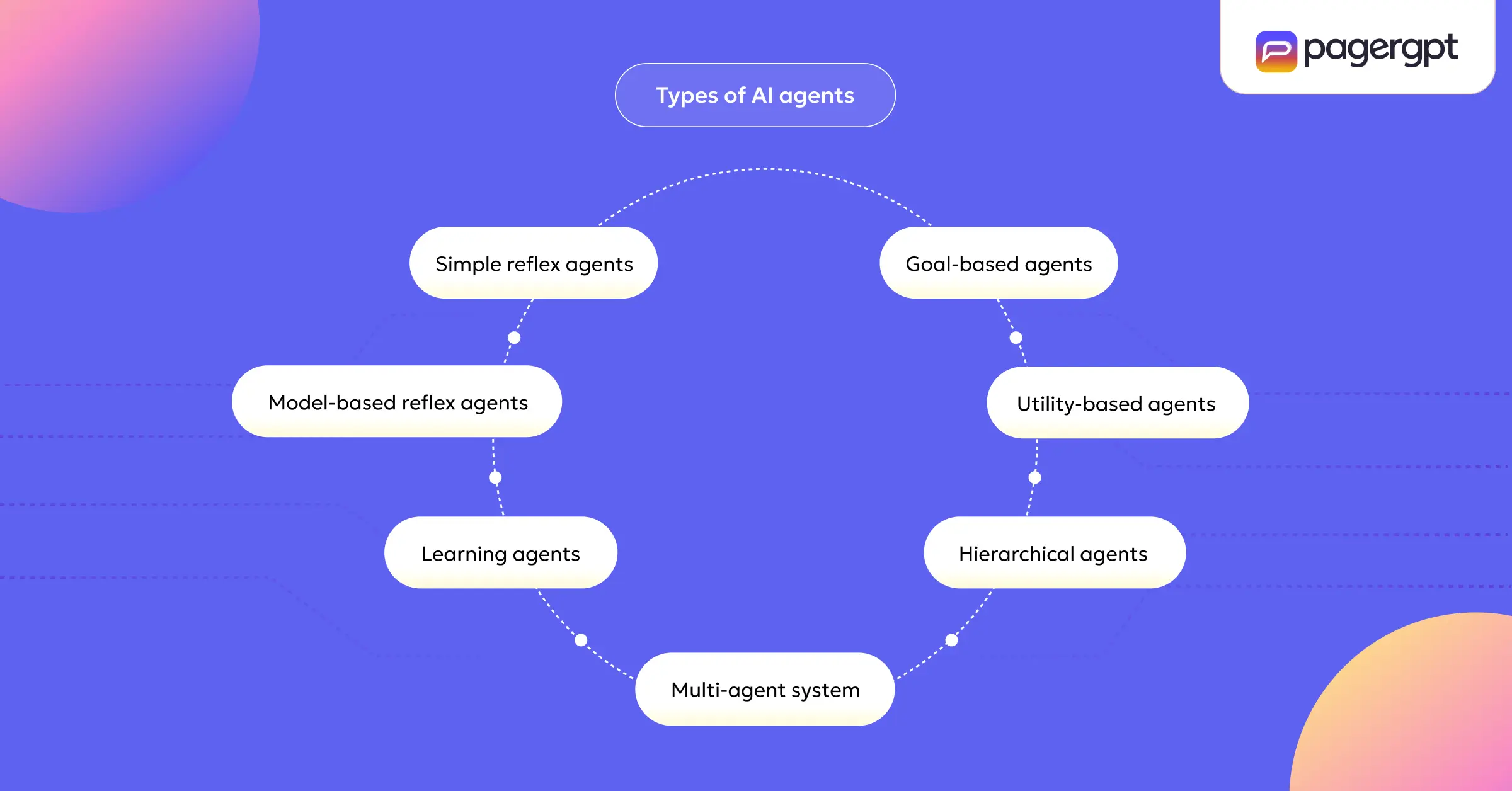
AI agents are of different types. They include simple reflex, model-based reflex, goal-based agents, utility-based agents, learning agents, hierarchical agents, and multi-agent systems. Let’s discuss each of them with examples.
Simple reflex agents
These agents follow basic if-this-then-that logic. They respond directly to current conditions with no memory of past events. For example, a motion-sensor light turns on when it detects movement and turns off after a set time of inactivity.
Model-based reflex agents
Compared to simple reflex agents, model-based reflex agents use an internal “model” of how the environment works. This allows them to factor in both current input and historical state when deciding what to do. They’re more flexible than simple reflex agents but still limited by the accuracy of their internal model.
For example, a self-driving car approaching an intersection might not see the traffic light clearly due to fog or glare. But it can still decide to slow down or stop.
Goal-based agents
Goal-based agents are programmed to act toward specific goals. They weigh different possible actions based on whether those actions help achieve the defined goal. This allows them to plan ahead rather than only react. They’re common in navigation, decision-making, or any workflow where reaching an end state matters most.
For example, a smart budgeting app that adjusts your spending limits based on your savings goal is an example of a goal-based agent.
Utility-based agents
Utility-based agents extend goal-based design by not just chasing outcomes but optimizing them. They calculate the “value” of different actions and pick the one that maximizes overall benefit. This makes them ideal in business settings like pricing strategies, logistics planning, or marketing campaigns, where trade-offs must be balanced to get the highest value.
For example, a pricing optimization agent for e-commerce that chooses discounts by balancing conversion rates, profit margins, and inventory levels.
Learning agents
Unlike preprogrammed agents that work only using predefined knowledge, learning agents improve over time. They analyze past performance, user feedback, and new data to refine their behavior and adapt to changing conditions.
For example, a virtual keyboard like Gboard learns how you type and personalizes recommendations based on your writing style, commonly used words, and corrections.
Hierarchical agents
Hierarchical agents work in layers. The higher-level agents set the big goals, while the lower-level ones break those goals into clear, actionable steps. This makes it easier to manage complex workflows because each layer focuses on a different part of the decision-making process.
Take content creation as an example. A top-level agent might oversee the overall objective of “produce a blog post.”
Sub-agents then handle specific steps like researching the topic, generating a draft, editing for tone and grammar, and preparing the final version for publishing.
Multi-agent system
A multi-agent system is a group of autonomous agents working in the same environment, with each one handling a specific task. Depending on the workflow, they can operate on their own or coordinate with one another.
For instance, in an employee support setup, one agent might troubleshoot IT issues, another could answer HR-related questions, and a third might manage access requests. By working together, they resolve problems more quickly and efficiently.
When to create custom AI agents?
The need for a custom AI agent usually shows up when your current systems or teams hit their limits. You’ll know it’s time if you’re looking for a solution to:
Tackle a high volume of repetitive queries
When you don’t have a scalable system, your team ends up spending countless hours resolving the same issues, pulling focus away from high-priority tasks that actually drive revenue.
This is where AI agents make the difference. Unlike basic chatbots, they use context, memory, and workflows to handle large volumes of repetitive queries with speed and accuracy.
Provide personalized support
If you’re struggling to tailor support for your customers, you’re not alone.
In a survey, 56% of senior marketing leaders admit that achieving real-time personalization remains one of the toughest challenges in improving customer experiences.
AI agents help you deliver exceptional customer experiences through hyper-personalized interactions, analyzing each customer’s history, behavior, and preferences.
Resolve administrative inefficiency
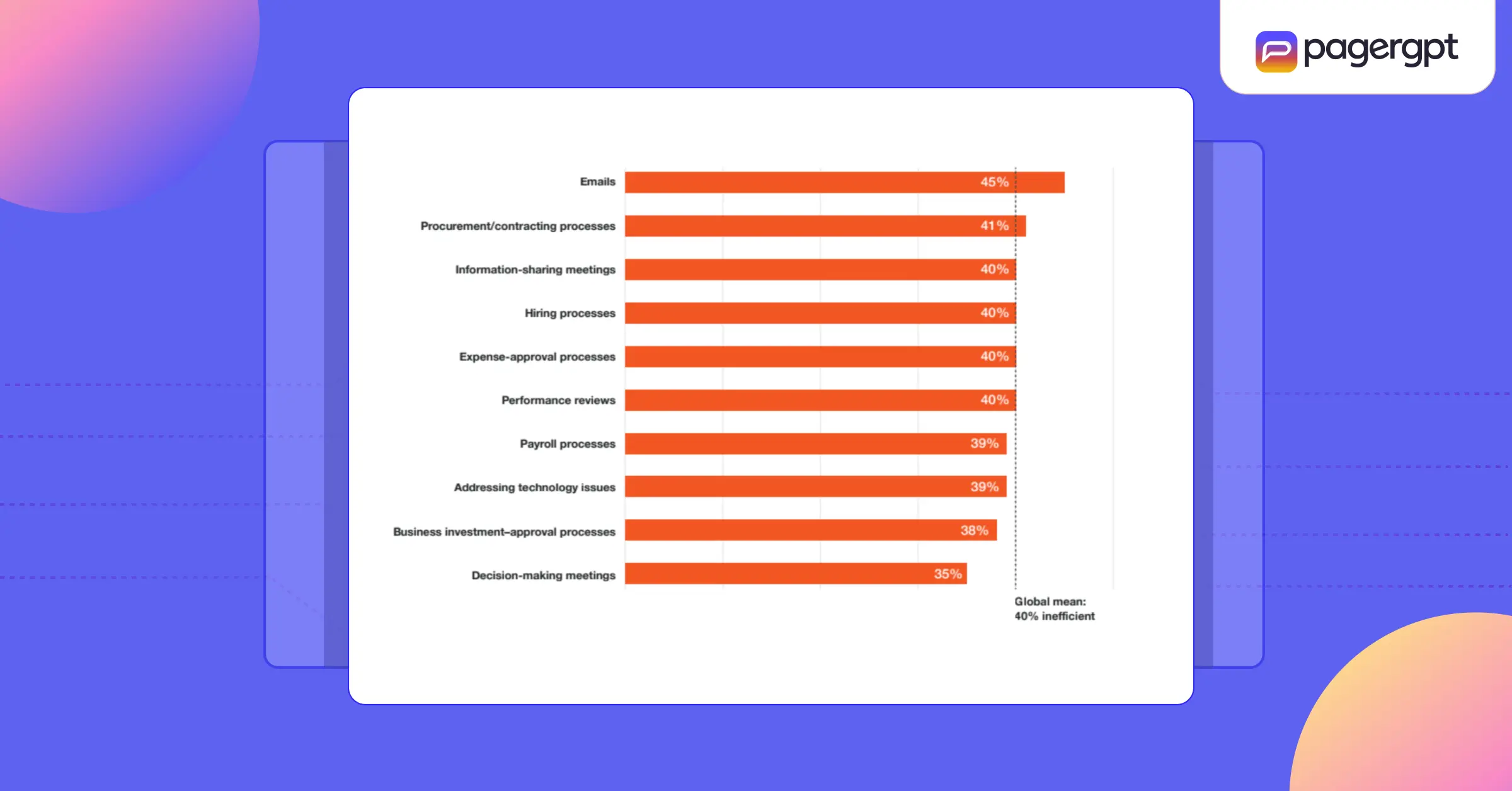
A significant portion of company time is wasted on repetitive, low-value tasks.
PwC’s CEO survey found that executives believe 40% of the time spent on routine activities like meetings and emails is inefficient. In the same study, 84% of leaders said AI could help reclaim that time by making employees more efficient. especially in HR processes, where AI in HR reduces manual workload
Case in point: AI agents can takeover tasks like scheduling, drafting responses, or routing approvals, acting as assistants so employees can focus on high-value work that drives productivity.
Reducing operational costs
As your company grows, costs naturally rise. But when you start adding headcount just to handle admin tasks, you will incur additional costs for training and purchasing extra software licenses.
AI agents remove much of this overhead by automating repetitive admin and support work. This frees up resources that can be spent on high-value initiatives.
Top 10 benefits of building custom AI agents
If you’re wondering whether it is worth building a custom AI agent, here are the top 10 benefits for you:
Increased productivity
Custom AI agents double your team’s productivity by automating repetitive, low-value work. In support, they auto-resolve common queries like password resets, order tracking, or account updates.
In sales, they generate call summaries, send timely follow-ups, and keep CRM data clean. The outcome is higher throughput and faster cycle times without scaling headcount.
Personalization at scale
Custom AI agents can tailor experiences by learning from history, behavior, and context.
For example, an engineer could instantly receive documentation relevant to their current project, while a skincare shopper might see follow-up suggestions based on their earlier purchases.
Faster resolution
Custom AI agents resolve customer issues up to 3x faster than human teams. What once took 35 minutes can now be completed in just 8, resulting in lower support costs, shorter queues, and higher CSAT scores.
They provide 24/7 availability to handle FAQs like refunds, shipping updates, or subscription changes, without requiring human input.
For complex queries that do need a human, the AI agent can triage the ticket, assign priority, and route it to the right team member with full context of the issue.
Multilingual and multichannel support
If you're looking to expand customer support globally and across multiple channels, custom AI agents can help you do this without adding extra costs.
Once trained on your company data, the agent can translate and respond in multiple languages while maintaining business context and accuracy.
For example, a customer might start a query on WhatsApp in Spanish and continue in Slack in English. The AI agent keeps the context of the conversation intact, ensuring seamless support across both languages and channels.
Organizational cost savings
You can reduce hiring costs by letting custom AI agents handle repetitive work like answering FAQs, data entry, and routine workflows with speed and accuracy.
They also eliminate inefficiencies that drive hidden costs, such as errors, rework, and time lost switching between systems.
The result is leaner operations, lower overhead, and more output without increasing headcount.
Better risk management
AI agents constantly monitor workflows and spot anomalies that a human eye can miss. They can catch unusual patterns like suspicious account activity, unexpected spikes in requests, or errors in data entry before they turn into bigger issues.
By flagging risks early and escalating the right cases, they help you prevent fraud, maintain compliance, and reduce costly mistakes.
Scalability and adaptability
Custom AI agents grow with your business. Whether you serve 100 or 10,000 customers, they scale across support, IT, and sales while keeping full context and continuously learn from interactions to improve performance.
That means you don’t need to rebuild systems every quarter. Your operations evolve automatically and stay efficient as you expand.
Enhanced decision-making
With custom AI agents, business leaders get real-time visibility into how each workflow. In sales, that could mean granular insights into pipeline health, follow-up effectiveness, and win rates. In customer support, you see ticket volumes, resolution times, and customer sentiment as they shift.
By weighing all these factors in real time, you can make informed decisions that improve support strategy, optimize resource allocation, and ultimately deliver a better customer experience.
Better knowledge management
You can improve your knowledge management with custom AI agents. How?
By monitoring interactions, AI agents gather new information, flag outdated content, and identify gaps in your knowledge base.
For example, if customers repeatedly ask about a feature that your documentation doesn’t explain well, the AI agent can suggest updates or highlight missing content. Over time, this keeps your knowledge base accurate, searchable, and aligned with customer interests without manual work.
Competitive advantage
Early adopters of custom AI agents gain a first-mover edge. The sooner you deploy them, the faster they learn from your data and interactions, building a knowledge moat that competitors can’t easily replicate.
Every conversation sharpens their accuracy, creating a flywheel effect: the more they’re used, the smarter they get. Over time, this compounds into faster execution, lower costs, and a depth of organizational knowledge that late entrants won’t catch up to.
Top 10 Use cases of custom AI agents
Now that we’ve covered what custom AI agents are and their top benefits, let’s look at how businesses are actually using them.
Here are 10 of the most impactful use cases across different functions:
Customer support
AI agents help you boost CSAT, lower support costs, shorten resolution times, and deliver a consistent customer experience at scale.
You can build custom customer support AI agents that:
Auto-resolve FAQs like refunds, password resets, and shipping updates.
Triage and route complex tickets with full context.
Provide 24/7 support across chat, email, and social channels.
Summarize long conversations for faster agent handoffs.
Sales
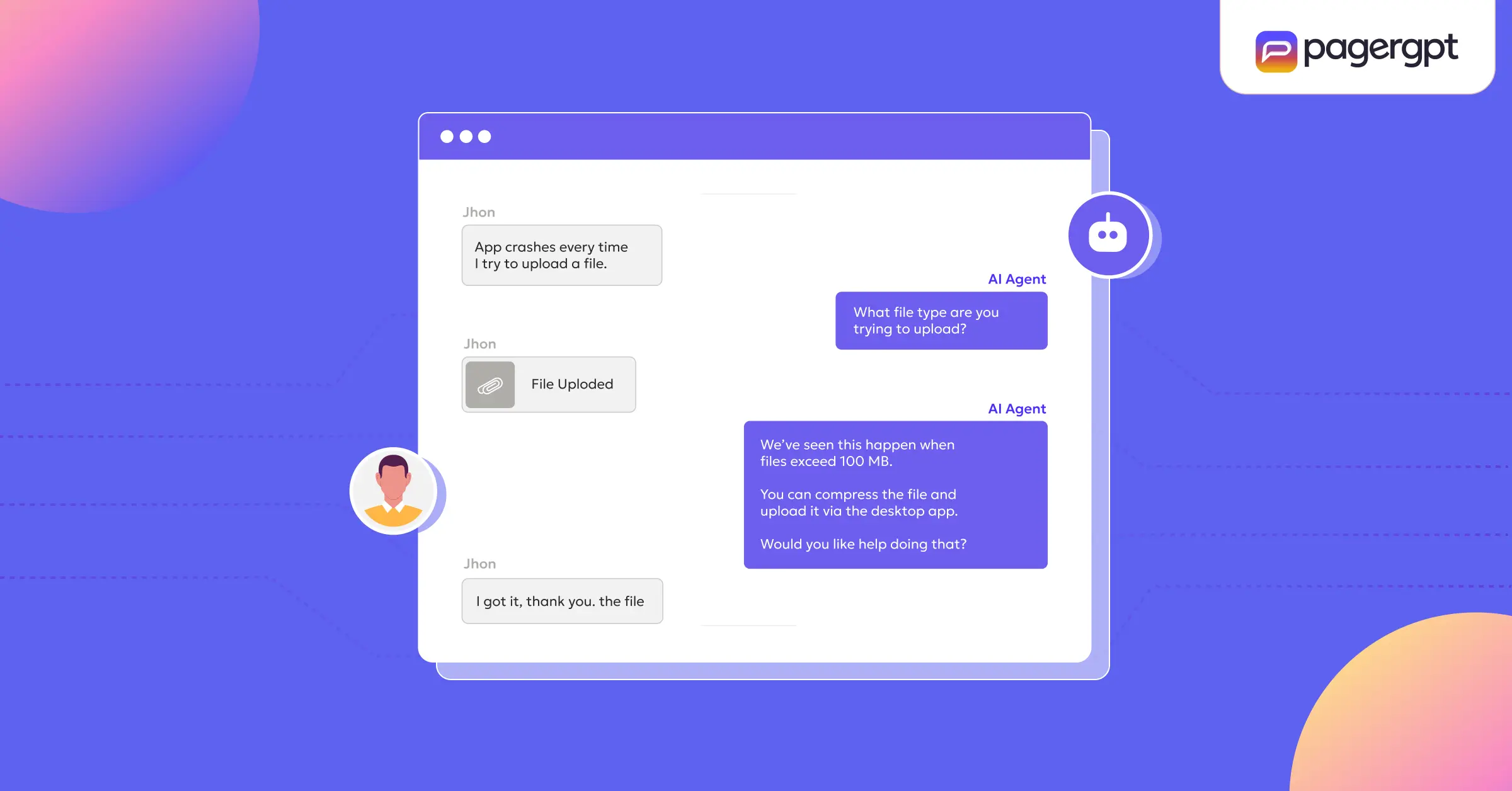
With custom AI agents built for sales, you can free your team from admin work so reps focus on selling, building relationships, and closing bigger deals.
Here’s what a sales AI agent can do:
Write call summaries with clear action items.
Send follow-up emails automatically.
Keep CRM records updated without manual entry.
Spot churn risks or upsell opportunities from past conversations.
Marketing
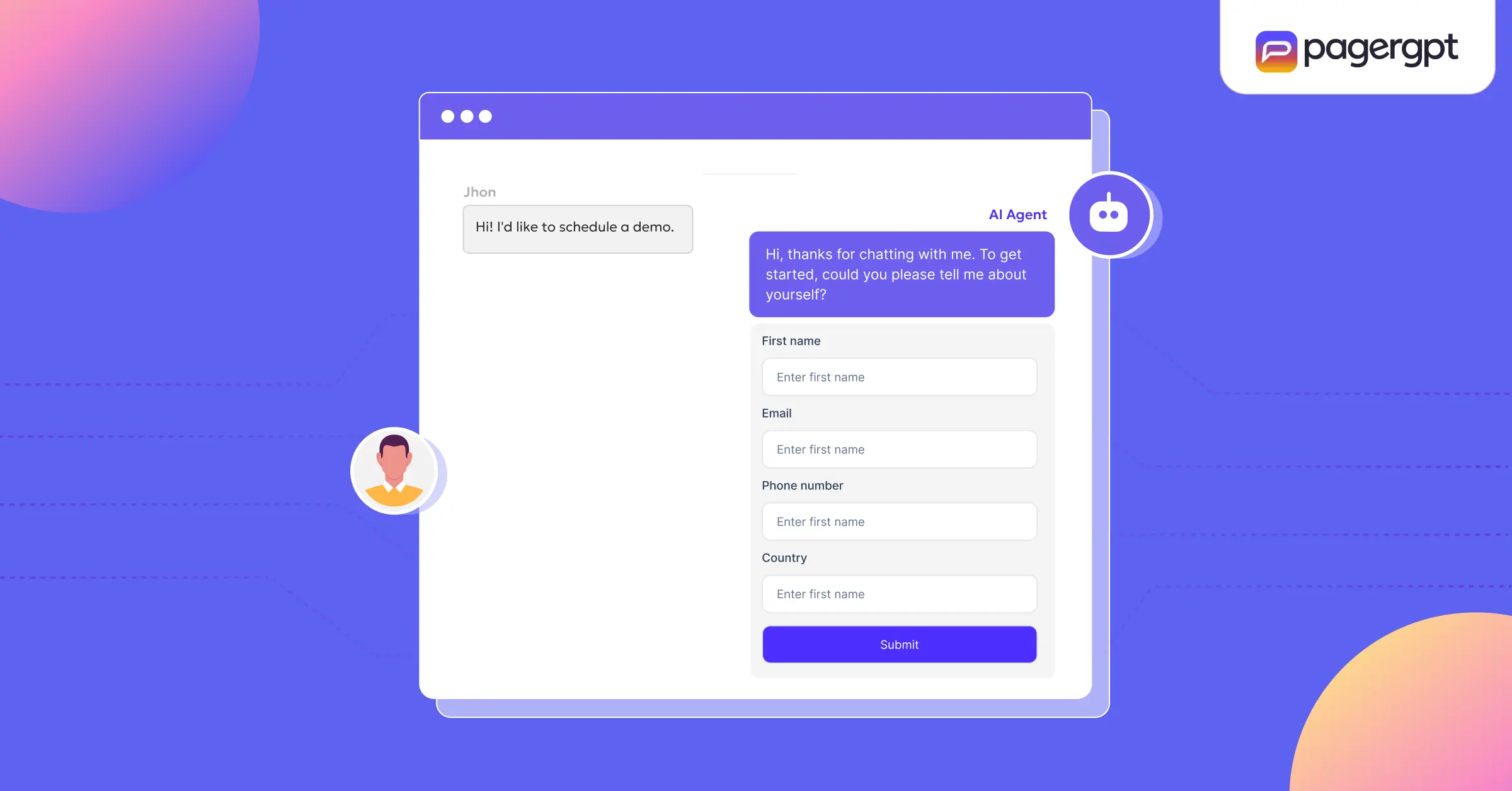
Marketing teams can use custom AI agents to automate repetitive tasks and deliver campaigns that feel timely and personalized at scale.
Here’s what a marketing AI agent can do:
Segment users based on behavior, demographics, and past activity.
Personalize emails, web experiences, and ads for each audience segment.
Support account-based marketing by identifying high-value accounts and lead qualification
Monitor social media to track mentions, feedback, and competitor activity in real time.
IT support
You can build AI agents for IT support to take the load off your helpdesk by resolving repetitive issues and keeping systems running smoothly.
Here are the tasks you can automate with an IT support agent:
Reset passwords and unlock accounts in seconds
Walk employees through basic troubleshooting without escalation
Route complex issues to the right specialist with context attached
Share setup instructions or “how-to” guides on demand
Respond instantly in Slack, Teams, or your IT portal
HR Support
HR staff are bogged down with tasks that consume time and effort that could have been better spent on spearheading strategic initiatives like hiring, managing compliance, and building company culture.
To take the load off your HR teams, you can build an HR AI agent that:
Answers questions about vacation policies, benefits, or payroll
Guides employees through onboarding steps and training modules
Assists in payroll processing, tax adjustments, and calculating loss of pay
Coding Assitance
Developers lose hours chasing bugs, writing boilerplate, or searching docs instead of shipping features. A coding AI agent helps developers accelerate shipping by:
Generating code snippets or boilerplate based on your specs
Debugging errors by suggesting fixes in real time
Reviewing pull requests and flagging potential issues
Explaining unfamiliar code blocks in plain English
Creative Writing
You can build a creative AI agent to give your team a head start in brainstorming ideas and spend more time on strategy and storytelling.
In practice, this looks like:
Generating first drafts for articles, emails, or ad copy
Suggesting alternative headlines, hooks, or CTAs
Repurposing long-form content into social posts or summaries
Checking tone and consistency across different pieces
Fraud detection
In banking, finance, or e-commerce, catching fraud early is critical. A fraud detection AI agent can:
Alert you when there are suspicious transactions or unusual spending patterns
Detect login anomalies like access from new devices or geographies
Escalate high-risk cases to human teams with full context
Healthcare
In healthcare, you can build an AI agent that can help you diagnose patients better, reduce administrative load, and make reliable decisions by connecting various data points.
Here’s what a healthcare AI agent can do:
Surface patient history, lab results, and research for doctors
Answer patient FAQs on appointments, prescriptions, or coverage
Flag anomalies in patient records and vitals for early diagnosis
Streamline scheduling, billing, and insurance claims
Manufacturing
In manufacturing, a one-hour downtime can cost up to millions in lost revenue. You can build to help you streamline operations, reduce downtime, and improve quality control across the production line.
Here’s what a manufacturing AI agent can do:
Predict equipment failures by monitoring sensor data and spotting early warning signs.
Optimize the supply chain by forecasting demand and inventory needs
Assist workers with step-by-step troubleshooting and process documentation
Track production metrics in real time and surface insights for managers
How to create a custom AI agent with pagergpt?
Building a custom AI agent may sound complex, and it often is when you don’t have the right tools. pagergpt is a no-code AI agent builder that lets you design, train, and deploy custom AI agents that fit your workflows, all in one place.
With built-in features like a shared inbox, lead capture, and multilingual, multichannel support, you can create agents for customer support, sales, marketing, IT, and more.
Let’s go step by step to see how you can create a custom AI agent with pagergpt:
Sign up with pagergpt
Getting started with pagergpt is easy. To sign up, simply enter your email, set a password, and your account is ready.
The best part? You can start for free, no credit card required.
Log in and hit the ‘create your AI agent’ button
Once your account is ready, log in, and you’ll land in Agent Studio.
From here, just hit the Create button. You’ll see two options: choose a ready-to-use agent or build one from scratch.
Choose “create from scratch”
If you want complete control, you can build one from scratch by defining its purpose, tone, and workflows step by step. Once you are done, you can get access to Agent Studio to customize the whole process.
This option works best when your business has unique processes or customer interactions that don’t fit into a template.
Select your industry-ready template and go as you define
If you don’t want to start from scratch, pagergpt gives you industry-ready templates for common use cases like customer support, sales, e-commerce, and employee support.
Each template includes workflows, actions, and conversation styles so you can launch an AI agent within minutes, then customize it by adjusting the tone, adding data sources, and setting rules to match your processes.
This option is ideal if you are seeking a balance between speed and flexibility.
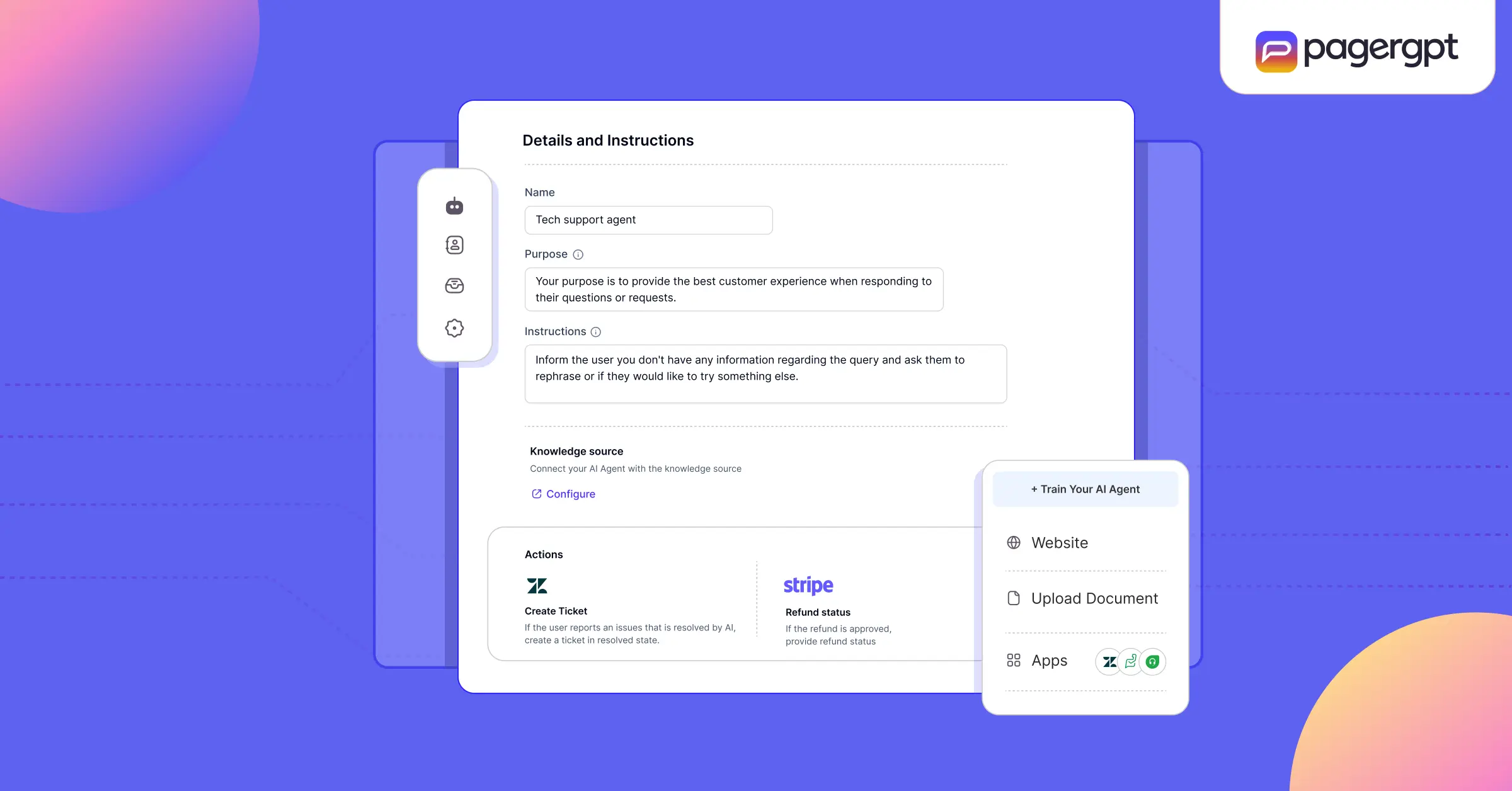
Connect knowledge sources
Your AI agent is only as good as the knowledge it can access. With pagergpt’s Knowledge Studio, you can train the AI agent using multiple sources like your website, knowledge base, help docs, PDFs, Notion pages, and Google Drive.
This ensures responses are grounded in accurate, business-specific data rather than generic answers. You can also keep these sources updated over time, so your agent always reflects the latest policies, product changes, or customer insights.
Choose a model and set rules
pagergpt gives you the flexibility to pick the right LLM foundation for your use case. You can choose between GPT-4o for complex workflows or GPT-4o mini for faster, repetitive queries.
Once the model is selected, you can:
Define tone and personality (formal, friendly, witty, and technical).
Establish response boundaries (what it should and shouldn’t answer).
Configure escalation paths for issues that need a human.
Integrate with tools and define actions
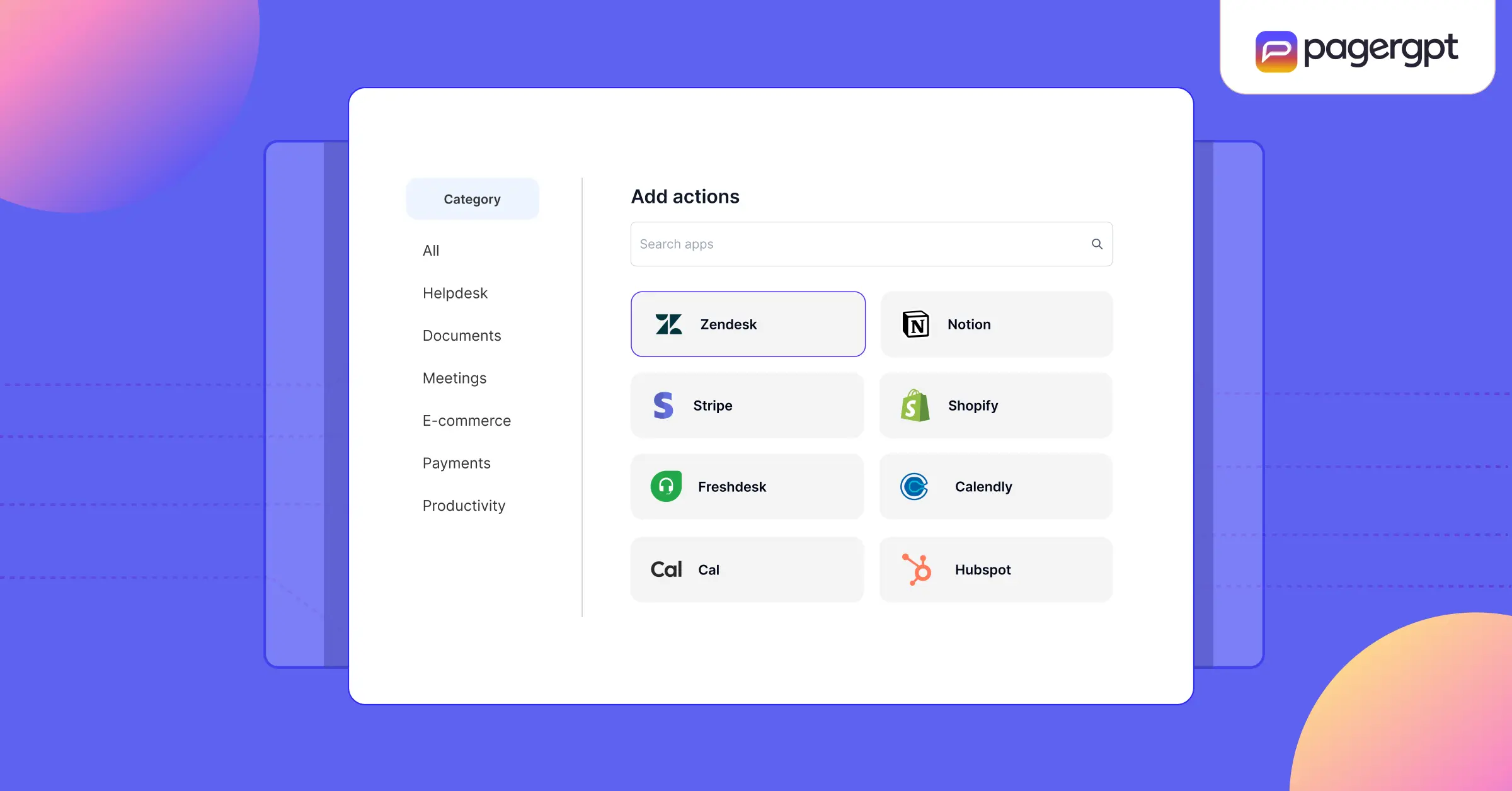
Once your AI agent is trained and rules are set, you connect it with the tools in your tech stack. pagergpt supports no-code integrations with platforms like Zendesk, Freshdesk, Stripe, HubSpot, Salesforce, Google Drive, and more.
From there, you define actions the agent can take, such as:
Processing refunds through Stripe.
Scheduling meetings via Cal.com or Google Calendar.
Creating tickets in Zendesk or Freshdesk with full context.
Sending Slack or Teams updates when issues are resolved.
Test with real-world scenarios
Before deploying, it’s important to validate how your AI agent performs in practice. Pagergpt gives you a safe playground for testing. You can simulate real-world customer queries, internal requests, or workflow triggers to test:
Accuracy of responses to FAQs or knowledge queries.
Whether the agent follows your defined rules and workflows.
How it handles edge cases like vague or incomplete inputs.
If you run into any issues with the agent’s response, you can always go back and refine it with ease. This way, pagergpt helps you ensure that the agent you’re deploying matches the benchmarks and can handle every given scenario with precision.
Customize and deploy across multiple channels
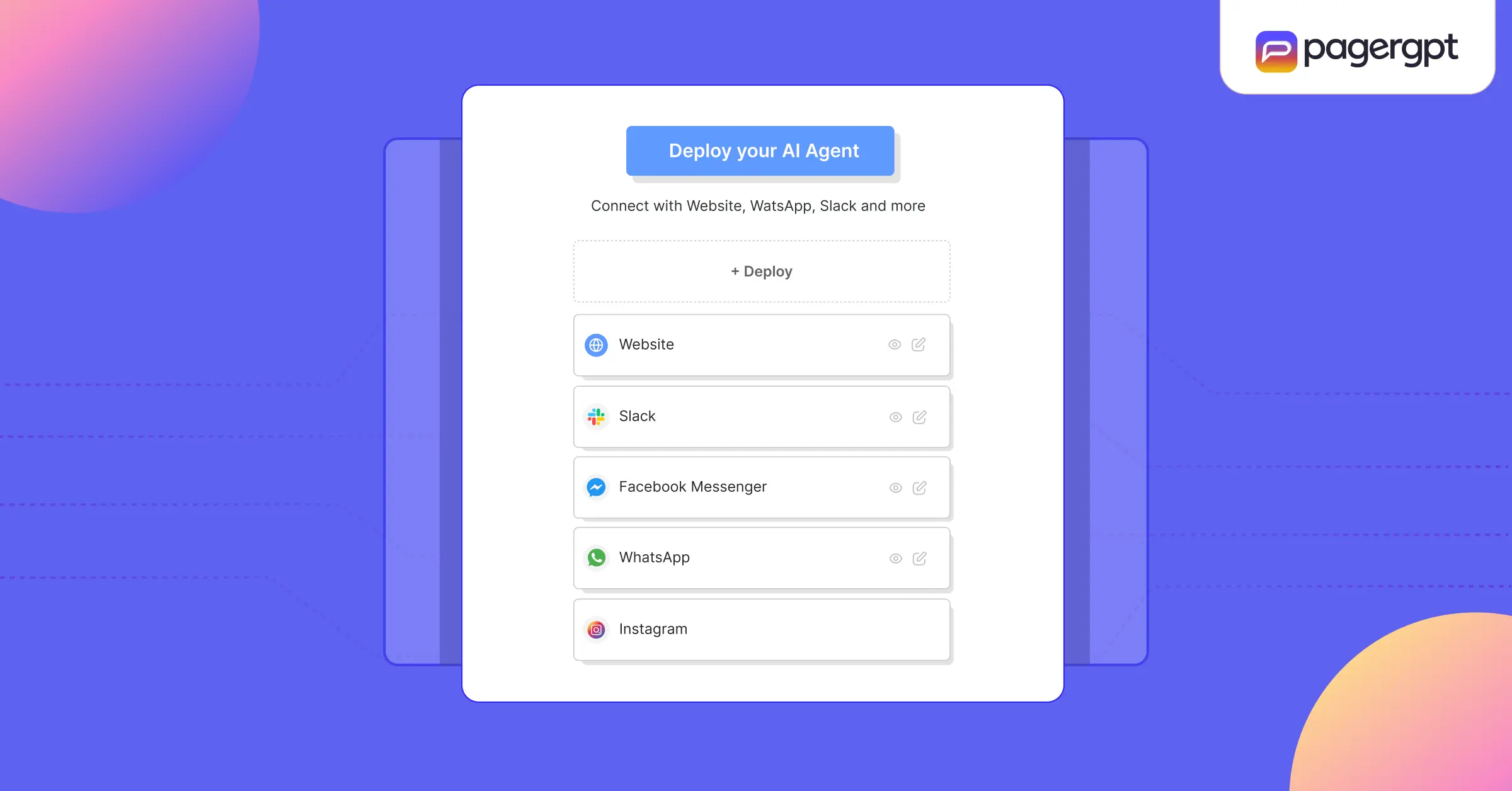
With pagergpt, you can customize your AI agent to match your brand by adjusting colors, greetings, fallback messages, logos, and more.
Once satisfied with its performance and look, you can deploy the agent across multiple channels such as Slack, WhatsApp, Messenger, and your website. This lets you make support more accessible for your customers and employees.
Monitor performance and iterate
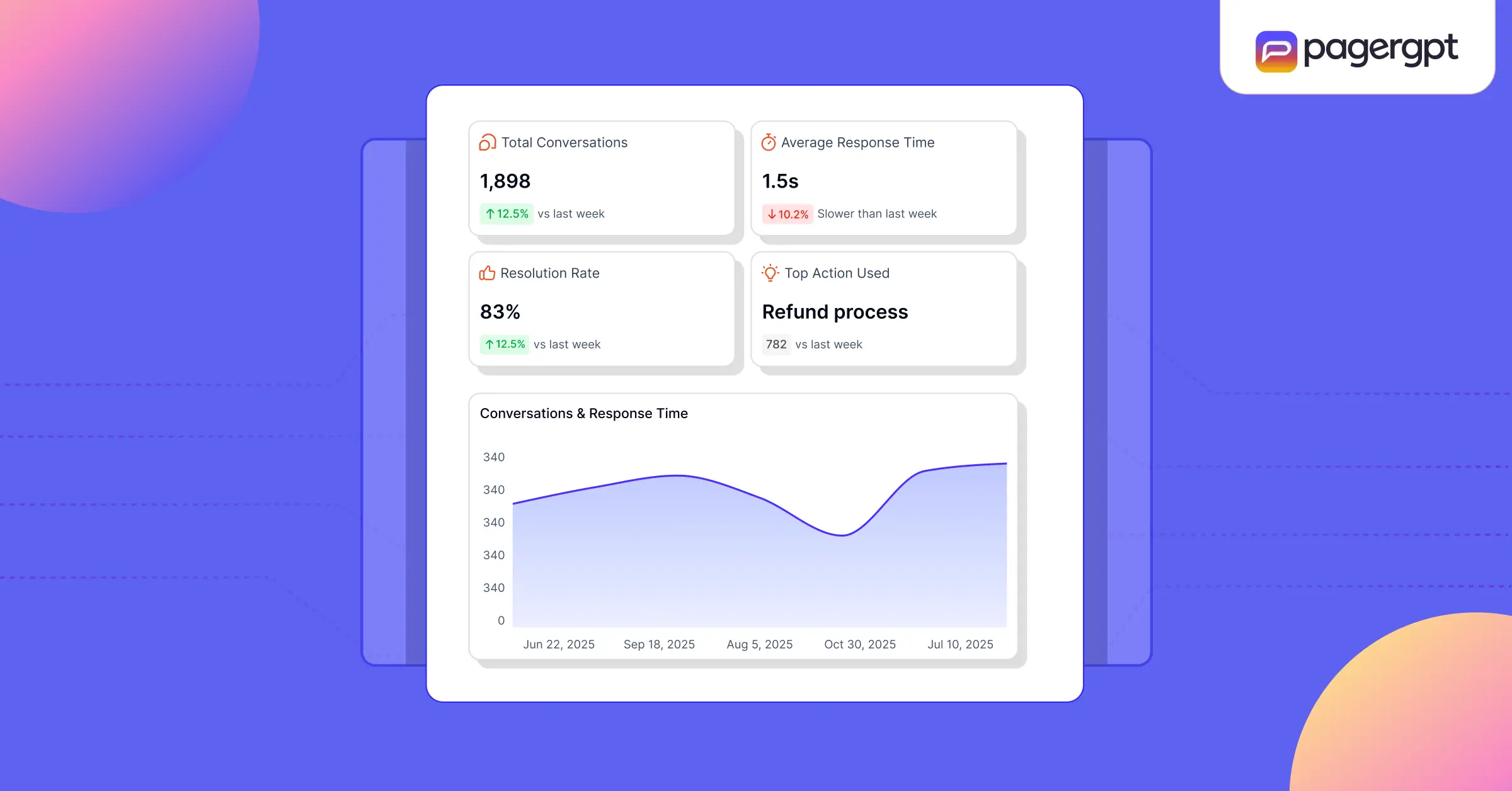
Beyond the launch, pagergpt gives you complete visibility into how your custom AI agents are performing.
You can track sessions, queries asked and resolved, response times, and user feedback through visual dashboards. These insights help you identify customer needs, close knowledge gaps, and refine workflows.
By continuously monitoring and iterating, your AI agents stay accurate, reliable, and aligned with both business goals and evolving customer expectations.
What are the best practices for creating custom AI agents?
When you’re building an AI agent, you need a clear purpose, high-quality data, well-defined rules, seamless integration, human oversight, and regular monitoring.
Let’s look at each best practice in detail:
Define a clear purpose for your AI agent
Decide exactly what the agent should handle and where it stops. If you’re building a customer support agent, think beyond vague goals like "improve support" and get specific:
Is the agent answering tier-1 queries only?
Should it ask for user context before giving a response?
Does it escalate to a human if it can’t find the answer?
Use high-quality data
It’s pretty straightforward when it comes to data: Garbage in, garbage out. If your data is incomplete, outdated, or poorly structured, your agent will either give vague responses or hallucinate entirely.
To ensure accurate, on-brand responses, collect and organize all your training sources such as ebooks, compliance documents, SOPs, reports, videos, texts, and PDFs. Double-check to remove redundant information, then train with updated data. Your AI agent will perform much better.
Establish AI guardrails
Setting up AI guardrails is critical for compliance, safety, and long-term trust. Guardrails define what your AI agent can and cannot say or do.
They filter out biased or harmful outputs, reduce hallucinations, enforce regulatory standards like GDPR or HIPAA, and keep responses aligned with your brand tone. Adding validation checks and human review for edge cases ensures reliability and accountability.
Design for integration
You should design the AI agent such that it facilitates better collaboration. If your team works in Salesforce, Zendesk, Stripe, or Slack, your agent should be able to log records, update tickets, process refunds, or send messages without switching platforms. The more seamlessly it plugs into existing workflows, the more value it delivers.
Incorporate human-in-the-loop
Even the best AI agents will run into edge cases they can’t resolve. That’s where human oversight matters. Design your agent to flag sensitive or uncertain queries and hand them off with full context.
For instance, in banking, an AI agent might handle routine policy questions automatically, but withdrawal or account access requests should escalate to a human for review. This balance keeps responses accurate and builds trust.
What are the future trends in AI agent development?
AI agents are improving at a remarkable pace. What once felt experimental is quickly becoming practical, and the focus now is on making agents smarter, more adaptable, and easier to plug into everyday business workflows. Here are a few directions where the technology is clearly headed:
Emotional intelligence
AI agents are becoming better at emotional intelligence. By analyzing tone, sentiment, and even facial cues, emotionally intelligent agents can adapt their responses for empathy and trust.
For example, in healthcare or customer service, the AI agent will be able to detect frustration and escalate to a human before the situation worsens.
Multimodal agents
Multimodal agents are the next wave in AI agent development. They can combine inputs like text, voice, images, and even sensor data to build richer context. A support agent, for example, could analyze a customer’s chat message alongside a screenshot to resolve the issue faster and more accurately.
Voice-first AI agents
With speech recognition and synthesis getting better every year, voice-first agents are becoming more natural and reliable. They can already manage high call volumes, and soon they’ll be able to have near-seamless conversations and then hand off tricky cases to humans without losing context.
Model Context Protocol (MCP)
One of the biggest challenges with AI agents today is connecting them to all the tools and data a business already uses. Traditionally, this means building dozens of custom integrations, which quickly becomes hard to maintain.
As a solution, MCP is emerging as a universal standard for connecting AI agents with external tools and data sources to scale their agent ecosystem more easily and reduce the complexity of maintaining connections.
Integration with IoT
By connecting with IoT devices, AI agents can extend into physical environments, enabling real-time decision-making. In factories, for example, they can track equipment performance and predict failures before they cause downtime.
Wrapping up
If you’ve made it this far, you know AI agents are no longer experimental. They’re becoming part of every core business function. From automating customer support to helping IT resolve issues faster, or enabling sales and marketing to deliver more personalized experiences, AI agents are reshaping how work gets done.
Now, you may think that building custom AI agents requires massive budgets, technical expertise, or months of setup. That may have been true in the past, but not anymore.
pagergpt breaks those barriers with a no-code platform that includes everything you need: train on your data, use ready-made templates, connect to workflows, collaborate with teammates, capture leads, and track performance in one place.
This results in faster time to value, better customer experiences, improved productivity, and scalability.
Ready to build your first custom AI agent? Try pagergpt today!
FAQs
Can I create my own AI agent?
Yes. With tools like pagergpt, you can build your own AI agent without coding. You can start from a ready-made template or build from scratch, then customize tone, workflows, and data sources to match exactly how your team works.
What are custom AI agents?
Custom AI agents are AI systems trained on your company’s data and connected to internal tools. They can resolve customer issues, onboard employees, automate tasks, and manage IT requests.
How much does an AI agent cost?
Costs depend on the platform, usage, and level of customization. Most solutions start with flexible subscription pricing, sometimes pay-per-seat or pay-per-volume. With platforms like pagergpt, you can begin affordably and scale as your needs grow, without the heavy upfront costs of traditional AI deployments.
What is the ROI of custom AI agents?
The ROI of investing in custom AI agents is reflected in the form of reduced support costs, faster resolution times, improved productivity, and increased customer satisfaction.
'%3e%3cpath%20d='M11.5732%2031.7068L19.2977%2022.7433L11.5732%2011.5366H17.4664L22.6245%2018.942L29.0522%2011.5366H30.7788L23.4029%2020.0985L31.4127%2031.7086H25.4997L20.1231%2023.9069L13.3197%2031.7068H11.5732ZM16.6519%2012.8366H13.9536L26.354%2030.4462H28.9926L28.8265%2030.1576L16.6519%2012.8366Z'%20fill='%230C0C0C'/%3e%3c/g%3e%3cdefs%3e%3cclipPath%20id='clip0_505_14364'%3e%3crect%20width='19.7681'%20height='20.2432'%20fill='white'%20transform='translate(11.573%2011.5365)'/%3e%3c/clipPath%3e%3c/defs%3e%3c/svg%3e)

'%3e%3cpath%20d='M25.2175%2011.7557L26.9132%2011.911V15.0496C26.0135%2015.1444%2024.1746%2014.7452%2023.5821%2015.5947C23.4908%2015.726%2023.3291%2016.1592%2023.3291%2016.3091V19.002H26.7392L26.3346%2022.5281H23.3291V31.5952H19.707V22.5863L19.649%2022.5281H16.6628V19.002H19.707C19.7813%2017.4024%2019.4664%2015.7042%2020.1132%2014.1986C20.6748%2012.8902%2021.7857%2012.0974%2023.1666%2011.8435L23.7151%2011.7557H25.2183H25.2175Z'%20fill='%230C0C0C'/%3e%3c/g%3e%3cdefs%3e%3cclipPath%20id='clip0_505_14375'%3e%3crect%20width='10.2695'%20height='19.8027'%20fill='white'%20transform='translate(16.658%2011.7567)'/%3e%3c/clipPath%3e%3c/defs%3e%3c/svg%3e)
About the Author
Narayani Iyear

Content Writer
Narayani is a content marketer and storyteller with a focus on digital transformation in the B2B SaaS space. She writes about enhancing employee and customer experiences through technology. A lifelong learner, she enjoys reading, crocheting, and volunteering in her free time.
Transform your customer support today
Deploy your AI Chatbot in 10 minutes.
- No credit card required
- Setup in minutes
- Cancel Anytime


