AI Chatbot Trends 2026: From Conversation to Action & Revenue
Discover the top AI chatbot trends in 2026, from agentic workflows and automation to integrations, compliance, and revenue-driving AI agents.


TL;DR
Chatbots become action-driven AI agents : The 2026 shift moves beyond conversation to agentic workflows that process refunds, file tickets, update CRMs, and complete multi-step tasks.

Multimodal and real-time experiences are standard : AI chatbots handle text, voice, images, and documents simultaneously while streaming responses instantly.
Compliance and transparency are non-negotiable : PII masking, audit logs, GDPR/HIPAA compliance, and decision interpretability become baseline requirements for enterprise use.
Hybrid AI+human models win over full automation : AI handles 60-85% of queries with seamless handoff to humans for complex cases, reducing costs and improving satisfaction.
You probably see many changes across the chatbot landscape. The way ChatGPT changes the chat experience through LLM innovations, every user expects a similar experience from their brands. With 73% of users already familiar with AI tools and 60% expecting to use Agentic AI, it is time for businesses to take notice of this shift.
With a wide range of use cases of chatbots for a variety of businesses, from small businesses to enterprises, companies are poised to take advantage of chatbot trends. Driven by people’s demand, trends in chatbots are something to watch out for.
In this guide, we break down the most essential chatbot trends shaping 2026. Below are the most important AI chatbot trends defining 2026. and why they matter for businesses planning to adopt or upgrade their conversational AI.
Agentic workflows become the new standard
One of the biggest AI chatbot trends in 2026 is the rise of agentic workflows.
In the past, chatbots mostly responded with text. They answered questions, shared links, and handed complex issues to humans. That approach no longer meets expectations.
In 2026, AI chatbots are designed to take action.
Modern AI agents can trigger workflows, connect with internal systems, and complete multi-step tasks on their own. They don’t just explain what needs to be done. They do it.
Common examples include:
Processing refunds from start to finish
Filing IT tickets with full diagnostic details
Updating CRM records automatically
Running approvals and internal HR workflows
This shift is happening because businesses need real automation, not just conversation. Support teams want faster resolution. Operations teams want fewer manual steps. Customers want instant outcomes.
As a result, chat is no longer just a communication channel.
In 2026, chat becomes the interface for automation.
Multimodal AI chatbots go mainstream
Another major AI chatbot trend in 2026 is the move beyond text-only conversations.
Modern AI chatbots can now understand and respond to more than written messages. They work across text, voice, images, and documents, all in a single conversation.
This matters because many real-world problems are not easy to explain with text alone. Users often want to show what is wrong rather than only type it out.
In 2026, AI chatbots can:
Understand screenshots and error messages
Read and summarize documents and PDFs
Handle real-time voice conversations
Respond with spoken or visual guidance
For customer support and onboarding, this is a big shift. Users can upload an image or document, and the chatbot immediately understands the context. Resolution becomes faster and more accurate.
As multimodal capabilities improve, chatbots feel less like tools and more like assistants. This trend is setting a new baseline for how conversational AI is expected to work in 2026.
Industry-tuned small models outperform general LLMs
Another important AI chatbot trend in 2026 is the rise of industry-trained AI models.
Large, general-purpose language models are powerful, but they are not always the best fit for business use cases. They can be expensive to run, slower to respond, and less accurate in specialized domains.
In 2026, many companies are choosing AI chatbots trained on industry-specific data instead.
These models are designed for specific domains, such as customer support, finance, healthcare, or SaaS products. Because of that focus, they perform better where it matters most.
Industry-trained models typically:
Deliver more accurate answers
Follow domain-specific rules and compliance
Respond faster with lower cost
Reduce hallucinations and errors
For example, a finance chatbot understands policies and regulations. A SaaS support chatbot knows product workflows and common issues. A healthcare chatbot is designed to follow strict guardrails.
This trend helps businesses build AI chatbots that are more reliable, scalable, and trusted. In 2026, accuracy and efficiency matter more than having the largest model available.
Full funnel CX automation
For a long time, AI chatbots were mainly used for support. They answered questions after a customer had already signed up or made a purchase.
That’s no longer the case in 2026.
Today’s AI chatbots are involved much earlier in the customer journey — and they stay involved long after the first interaction. Instead of handling just one stage, they support the entire funnel.
In practice, this means an AI chatbot can:
Capture and qualify inbound leads
Ask discovery questions during sales conversations
Guide new users through onboarding
Provide ongoing support and follow-ups
The experience feels continuous rather than fragmented. Customers don’t have to repeat themselves across tools or teams. The chatbot already knows the context.
This shift is driven by one simple idea: conversations shouldn’t stop at handoffs. In 2026, AI chatbots serve as a single layer that connects sales, onboarding, and support into a single flow.
As more teams adopt this approach, AI chatbots are becoming a core part of revenue and customer experience strategy not just a support add-on.
Speed and real-time experiences become a competitive advantage
When it comes to AI chatbots in 2026, speed is no longer a “nice to have.” It’s expected.
Users are used to instant responses everywhere else — search, payments, streaming, and apps. Chatbots are held to the same standard. If an AI takes too long to respond, it quickly feels broken.
That’s why real-time experiences are becoming a defining trend.
Modern AI chatbots now stream responses as they think and act. Instead of waiting for a full reply, users see progress immediately. Actions, updates, and next steps happen in front of them.
This has a direct impact on trust. Fast responses feel more reliable. Clear feedback reduces confusion. Users are more likely to complete tasks instead of dropping off.
In 2026, businesses that invest in low-latency, real-time AI chatbots stand out. Speed becomes part of the user experience and a quiet driver of conversion and satisfaction.
2026 trends aren’t predictions, they’re live
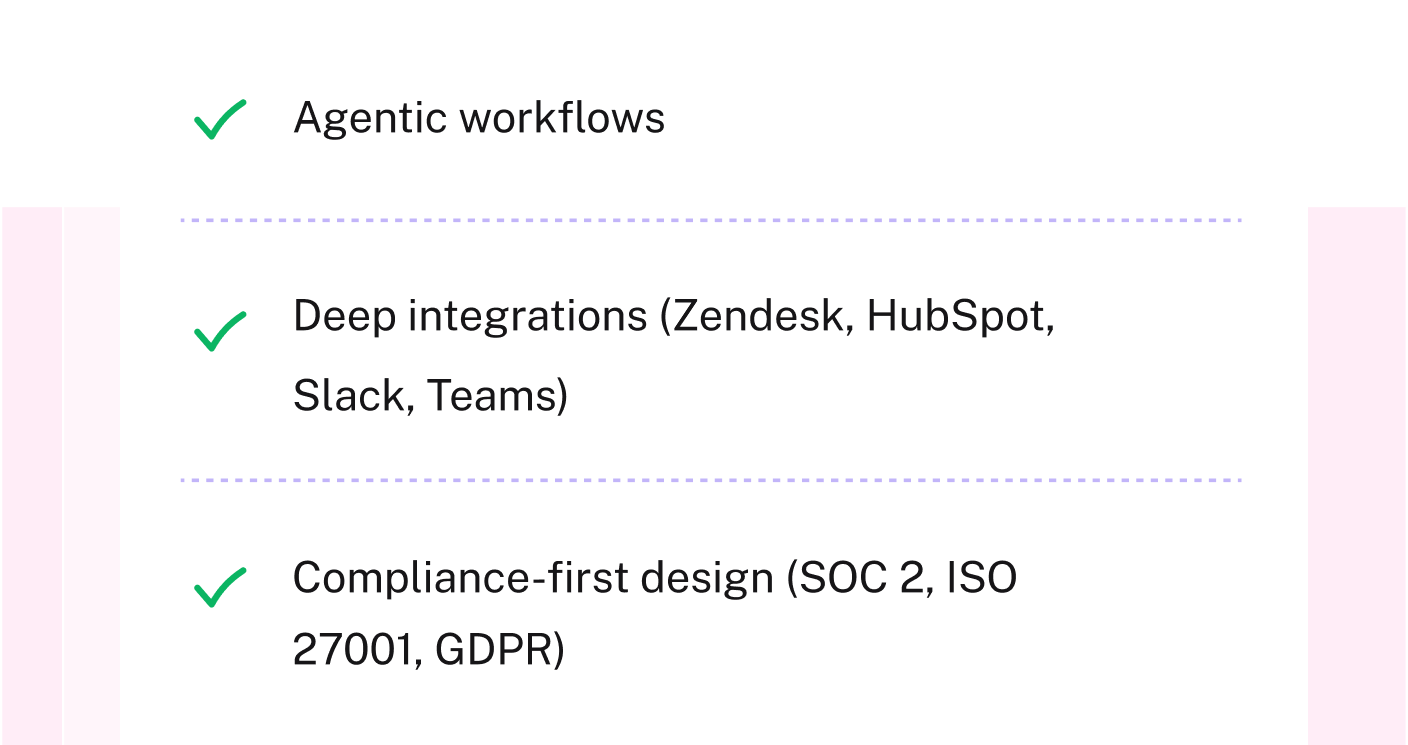
See how agentic workflows, multimodal AI, and deep integrations work in real AI chatbots.
Explore AI Chatbot Platform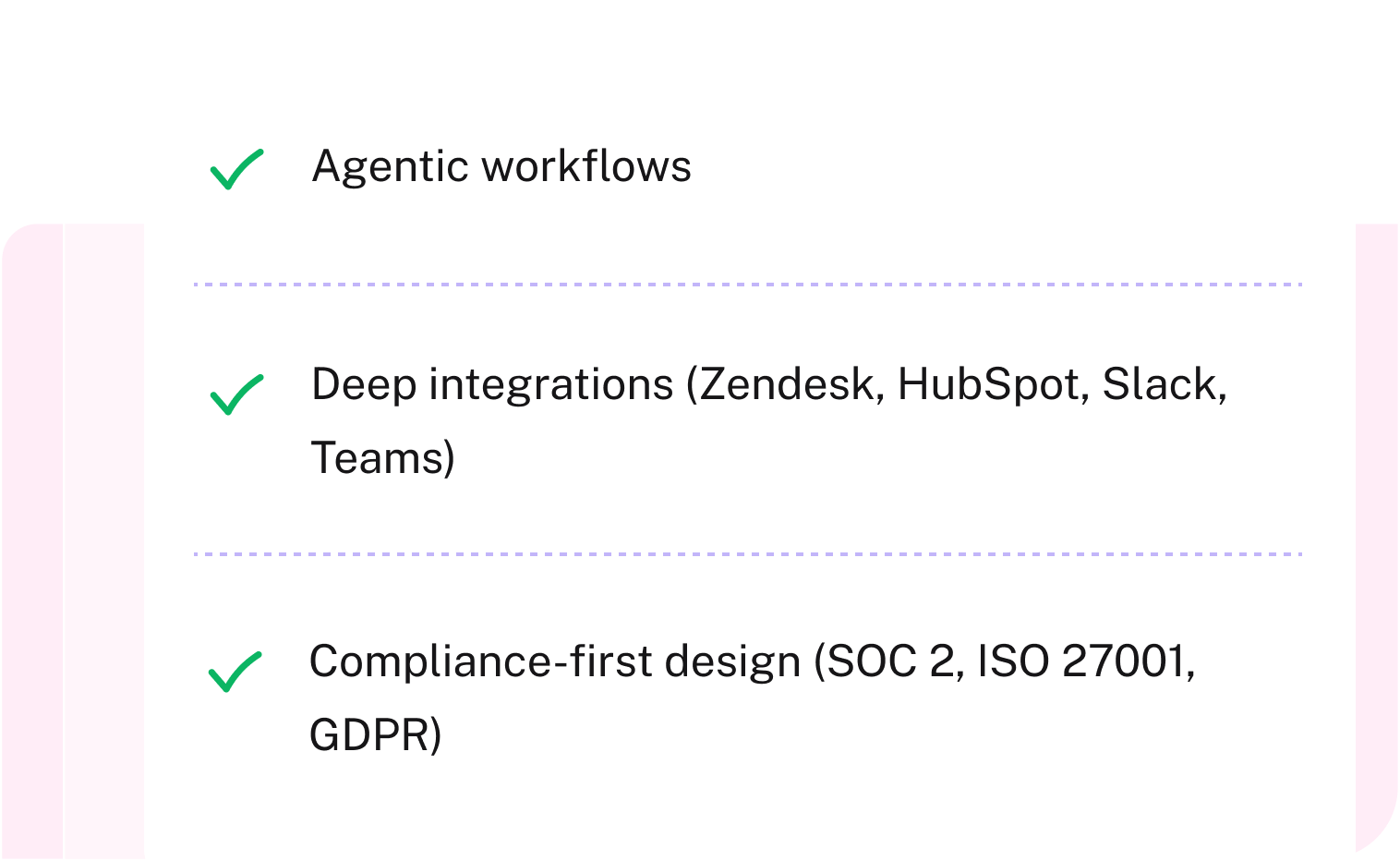
Zero-setup training with no-code deployment
In 2026, teams expect AI chatbots to work almost out of the box. Long setup cycles and manual training are quickly becoming outdated.
Modern AI platforms now learn automatically from existing sources like websites, PDFs, knowledge bases, and past tickets. There’s no need to build taxonomies or map intents by hand. The AI extracts and updates knowledge on its own, cutting onboarding time from weeks to hours.
At the same time, no-code and low-code builders make deployment easier for everyone. With platforms like pagergpt, non-technical teams can launch, train, and improve AI chatbots without relying heavily on engineering, while still allowing deeper customization when needed.
This shift is making AI chatbots faster to adopt, easier to maintain, and more practical for real business teams.
Real-time interpretability and decision transparency
As AI chatbots take more actions on behalf of users, visibility becomes essential. In 2026, businesses no longer accept AI systems that behave like black boxes.
Regulatory pressure and enterprise expectations are pushing AI chatbot platforms to show how decisions are made. Teams want to understand not just what the AI did, but why it did it.
This is leading to features such as:
Visible reasoning or action steps
Logged decision pathways for audits
On-demand explanations for AI actions
This level of transparency builds trust across teams, especially in regulated industries. It also makes AI easier to debug, monitor, and improve over time.
In 2026, AI chatbots are expected to be accountable. Interpretability and traceability are no longer advanced features they are required.
Compliance-first AI chatbots become mandatory
As AI chatbots take on more responsibility, trust becomes critical. In 2026, compliance is no longer an afterthought. It’s built in from the start.
Businesses now expect AI chatbots to handle sensitive data safely. That includes customer information, internal documents, and regulated workflows. Because of this, security and compliance features are becoming a baseline requirement.
Modern AI chatbot platforms focus on:
Built-in PII masking
Detailed audit logs
Role-based access controls
Region-specific data handling
Regulations such as GDPR, HIPAA, and the EU AI Act are pushing companies to adopt AI systems that are explainable, monitorable, and controllable.
Platforms such as pagergpt are designed with this compliance-first mindset, making it easier for teams to deploy AI chatbots confidently in enterprise and regulated environments.
In 2026, the question is no longer whether an AI chatbot is intelligent. It’s whether it’s safe, compliant, and ready for real-world use.
Deep integrations make AI chatbots the control layer
One of the most practical AI chatbot trends in 2026 is the deep integration of AI agents into business systems.
Earlier chatbots could connect to tools, but only in limited ways. They fetched data or triggered a single action. Everything else still required manual follow-ups.
In 2026, enterprise AI chatbots work very differently.
AI agents now operate across CRM platforms, support tools, HR systems, DevOps software, and billing platforms. A single conversation can update records, create tickets, trigger workflows, and notify teams across multiple systems.
This is possible because modern AI chatbot platforms are built for cross-system orchestration, not just conversation. The chatbot understands intent and manages the workflow behind the scenes.
The result is a simpler experience for users and far less manual coordination for teams. Instead of switching between tools, people interact with one AI layer that keeps everything in sync.
That’s the real shift behind this trend. In 2026, AI chatbots don’t just talk to systems — they run the workflow.
Human + AI hybrid support becomes the winning model
One of the clearest AI chatbot trends in 2026 is the move away from pure automation. Instead of trying to replace human support, companies are focusing on smarter collaboration between AI and people.
The most effective support teams now use AI chatbots as the first line of support. These AI agents handle common questions, routine requests, and repeat issues often resolving 60 to 85 percent of conversations on their own.
When a situation becomes complex, human experts step in. They don’t start from scratch. The AI provides context, conversation history, and even suggested replies, making handoffs faster and smoother.
This model is supported by shared inboxes and automation flows that keep everything in one place. Teams can see what the AI has done, what actions were taken, and what still needs attention.
The result is practical and measurable. Support costs go down. Response times improve. Customer satisfaction increases. In 2026, the best AI chatbot strategies are not about full automation they’re about balance.
You've Learned the Trends, Now Build With Them
pagergpt delivers all trends, Don't wait for competitors to adopt these trends first.
Try pagergpt Free

Agentic commerce turns chat into a revenue channel
In e-commerce, AI chatbots are no longer limited to answering product questions or tracking orders. They actively help customers buy. Using session data and context, AI agents personalize recommendations, guide decisions, and move shoppers closer to checkout.
Modern AI agents can build carts automatically, suggest relevant upsells or promotions, and adapt offers in real time based on user behavior. They also handle post-purchase workflows such as returns, exchanges, and subscription changes without friction.
What makes this trend different is intent. The AI isn’t just supporting a transaction, it’s driving it. The conversation becomes part of the buying journey, not a separate support layer.
In 2026, one of the most noticeable AI chatbot trends is the rise of agentic commerce. Chat is no longer a cost center. It becomes a direct revenue channel.
Autonomous troubleshooting becomes the norm for IT and SaaS
For IT and SaaS teams, support has traditionally been reactive. An issue happens, a ticket is raised, and someone investigates. In 2026, AI agents are changing that model.
Modern AI chatbots can monitor systems, read logs, and detect anomalies before issues escalate. When something goes wrong, the AI doesn’t just report the problem; it also explains why. It actively works to resolve it.
These agents can execute scripts, apply fixes, and automatically test outcomes. If human involvement is needed, the issue is escalated with a clear root-cause summary and full context.
This approach reduces downtime and shortens resolution cycles. It also frees up engineering and IT teams to focus on higher-value work.
For SaaS, telecom, fintech, and enterprise IT environments, autonomous troubleshooting is quickly becoming a standard expectation, not an advanced feature.
How to choose the right AI chatbot platform in 2026
Not all chatbot platforms are built for what businesses need today. In 2026, choosing the right one means looking beyond basic chat and focusing on outcomes.
Start with the core capabilities : The best AI chatbot platforms in 2026 support actions, workflows, and multi-step task execution. No-code and low-code setup is important so teams can move fast without heavy engineering support.
Check how well it integrates : A modern AI chatbot platform should connect easily with CRMs, support tools, analytics systems, and internal apps. Strong integrations are what allow AI agents to manage workflows instead of working in silos.
Don’t ignore analytics and visibility : You should be able to track automation rates, resolution times, handoffs, and overall performance. Clear analytics help teams trust the AI and improve it over time.
Avoid legacy chatbot limitations : Rule-based or script-driven chatbots struggle with complex requests. They don’t adapt well and often break as use cases grow. These systems may look simple, but they slow teams down in the long run.
Conclusion: the future of AI chatbots is agent-driven
AI chatbot platform trends in 2026 favor tools that are flexible, integrated, and built to deliver real business results not just conversations.
AI chatbots in 2026 are defined by what they can get done. They don’t just respond to users. They take action, coordinate systems, and help teams move faster.
Across support, sales, operations, and commerce, the shift is clear. Outcome-driven AI agents are becoming the standard. Businesses that adopt them early are seeing faster workflows, lower costs, and better customer experiences.
At the same time, expectations are rising. Customers want instant resolution. Teams want automation that actually works. Legacy chatbots struggle to keep up, while modern AI agent platforms are built for this new reality.
If you’re exploring where to start, pagergpt is designed for exactly this shift. It helps teams build agent-driven AI chatbots with no-code setup, deep integrations, and enterprise-ready controls, without long onboarding cycles.
The future of AI chatbots is already here. The question is how quickly you adopt it.
Ready to experience agent-driven automation? Start free or schedule a demo to see pagergpt in action.
FAQs
What are the biggest AI chatbot trends in 2026?
AI chatbots are becoming action-driven AI agents. Key trends include automation, deep integrations, multimodal support, compliance-first design, and outcome-based workflows.
How are AI chatbots evolving in 2026?
They are moving from answering questions to taking actions, coordinating systems, and completing tasks autonomously.
Are AI chatbots replacing human agents in 2026?
No. Most teams use a hybrid model where AI handles routine requests and humans focus on complex cases.
Which industries benefit most from AI chatbots in 2026?
Customer support, SaaS, e-commerce, fintech, healthcare, telecom, and enterprise IT see the biggest impact.
What should businesses look for in AI chatbot software in 2026?
Action-based workflows, strong integrations, no-code setup, analytics, and enterprise-grade security — features platforms like pagergpt are built around.
What makes 2026 AI chatbots different from previous generations?
2026 chatbots are agentic—they don't just answer questions, they execute workflows, coordinate across systems, and complete tasks autonomously. They handle multimodal inputs (text, voice, images), operate in real-time, and integrate deeply with business tools like CRMs and support platforms.
How do AI chatbots drive revenue in 2026?
Through agentic commerce, AI chatbots actively guide purchasing decisions, personalize recommendations using session data, build carts automatically, suggest upsells, and handle post-purchase workflows. Chat transforms from a cost center to a direct revenue channel throughout the customer journey.
What does "full funnel CX automation" mean for AI chatbots?
Instead of only handling post-purchase support, 2026 AI chatbots operate across the entire customer journey—capturing and qualifying leads, guiding sales conversations, onboarding new users, and providing ongoing support with continuous context, eliminating handoff friction.
What should businesses prioritize when choosing an AI chatbot platform in 2026?
Look for action-based workflows (not just chat), no-code setup for fast deployment, deep CRM/support tool integrations, real-time analytics and interpretability, enterprise security (GDPR, HIPAA, SOC 2), and hybrid AI+human support capabilities—features platforms like pagergpt are built around.
'%3e%3cpath%20d='M11.5732%2031.7068L19.2977%2022.7433L11.5732%2011.5366H17.4664L22.6245%2018.942L29.0522%2011.5366H30.7788L23.4029%2020.0985L31.4127%2031.7086H25.4997L20.1231%2023.9069L13.3197%2031.7068H11.5732ZM16.6519%2012.8366H13.9536L26.354%2030.4462H28.9926L28.8265%2030.1576L16.6519%2012.8366Z'%20fill='%230C0C0C'/%3e%3c/g%3e%3cdefs%3e%3cclipPath%20id='clip0_505_14364'%3e%3crect%20width='19.7681'%20height='20.2432'%20fill='white'%20transform='translate(11.573%2011.5365)'/%3e%3c/clipPath%3e%3c/defs%3e%3c/svg%3e)

'%3e%3cpath%20d='M25.2175%2011.7557L26.9132%2011.911V15.0496C26.0135%2015.1444%2024.1746%2014.7452%2023.5821%2015.5947C23.4908%2015.726%2023.3291%2016.1592%2023.3291%2016.3091V19.002H26.7392L26.3346%2022.5281H23.3291V31.5952H19.707V22.5863L19.649%2022.5281H16.6628V19.002H19.707C19.7813%2017.4024%2019.4664%2015.7042%2020.1132%2014.1986C20.6748%2012.8902%2021.7857%2012.0974%2023.1666%2011.8435L23.7151%2011.7557H25.2183H25.2175Z'%20fill='%230C0C0C'/%3e%3c/g%3e%3cdefs%3e%3cclipPath%20id='clip0_505_14375'%3e%3crect%20width='10.2695'%20height='19.8027'%20fill='white'%20transform='translate(16.658%2011.7567)'/%3e%3c/clipPath%3e%3c/defs%3e%3c/svg%3e)
About the Author
Deepa Majumder

Senior content writer
Deepa Majumder is a writer who specializes in crafting thought leadership content on digital transformation, business continuity, and organizational resilience. Her work explores innovative ways to enhance employee and customer experiences. Outside of writing, she enjoys various leisure pursuits.
Transform your customer support today
Deploy your AI Chatbot in 10 minutes.
- No credit card required
- Setup in minutes
- Cancel Anytime

